
Affiliates

Heather Shoenberger
- Associate Professor
- CSRAI Affiliate
Department/Unit: Bellisario College of Communications
Email: hus503@psu.edu
Research Interests: How consumers navigate the media landscape of today's world, particularly in understanding individual and societal impacts of generative AI technologies.

Paul Shrivastava
- Professor
- CSRAI Affiliate
Department/Unit: Smeal College of Business
Email: pxs993@psu.edu
Research Interests: AI for sustainable development, climate change, and AI ethics and policy

Dhananjay Singh
- Teaching Professor, Informatics and Intelligent Systems
- CSRAI Affiliate
Department/Unit: College of Information Sciences and Technology
Email: DVS6298@PSU.EDU
Research Interests: My research and teaching interests in developing trustworthy, human-centered, and socially impactful AI systems.Keywords: AI in Aging Populations, GenAI model for Education, Human-Centered AI

Madhusudan Singh
- Associate Teaching Professor
- CSRAI Affiliate
Department/Unit: College of Engineering
Email: mps6990@psu.edu
Research Interests: Artificial intelligence, blockchain technology, data science, and privacy-preserving computing
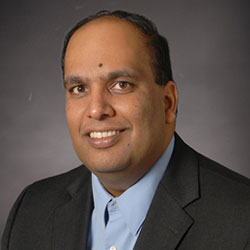
Puneet Singla
- Professor
- CSRAI Affiliate
Department/Unit: College of Engineering
Email: psingla@psu.edu
Research Interests: Data driven modeling, uncertainty quantification, control of aerospace vehicles
Martin Skladany
- Professor
- CSRAI Affiliate
Department/Unit: Penn State Dickinson Law
Email: mus67@psu.edu
Research Interests: AI and culture, AI and politics, AI and ethics

Aleksandra (Seša) Slavković
- Dorothy Foehr Huck and J. Lloyd Huck Chair in Data Privacy and Confidentiality; Professor of Statistics and Public Health; Associate Dean for Research
- CSRAI Affiliate
Department/Unit: Eberly College of Science
Email: abs12@psu.edu
Research Interests: Her research interests include methodological developments in the area of data privacy and confidentiality in the context of small and large scale surveys, health, genomic, and network data. Her focus is on the interplay of tools from statistics and computer science that leads to formal privacy protection -such as differential privacy- and broad data access, but also offers guarantees of accurate statistical inference needed to support reliable science and policy. Other past and current research interests include evaluation methods for human performance in virtual environments, statistical data mining, application of statistics to information sciences and social sciences, algebraic statistics, and causal inference.

Gloria Soto
- Professor
- CSRAI Affiliate
Department/Unit: College of Health and Human Development
Email: gsoto@psu.edu
Research Interests: I am interested in the acquisition and use of language via augmentative and alternative communication (AAC). AAC includes tools, methods, and strategies to support communication for individuals who have little or no functional speech due to disability, including speech generating devices (SGD). AI will have an enormous impact in the design of communication technologies and it is critical that their use reflects operating principles of language development as well as is made widely accessible to users from different linguistic communities.
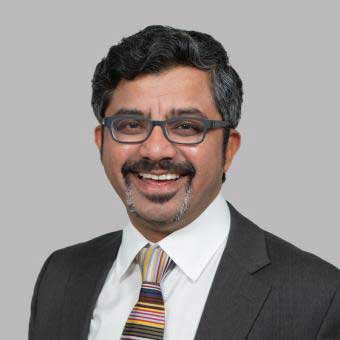
S. Shyam Sundar
- James P. Jimirro Professor of Media Effects
- CSRAI Director
Department/Unit: Donald P. Bellisario College of Communications
Email: sss12@psu.edu
Research Interests: S. Shyam Sundar is James P. Jimirro Professor of Media Effects and founder of the Media Effects Research Laboratory in the Donald P. Bellisario College of Communications. His research investigates social and psychological effects of interactive media, including mobile phones, social media, chatbots, robots, smart speakers and algorithms. His experiments investigate the role played by technological affordances in shaping user experience of mediated communications in a variety of interfaces. Current research pertains to fake news, chatbots and smart speakers, AI algorithms, online privacy, social media uses and effects, persuasive aspects of human-computer interaction (HCI), and the strategic use of communication technologies for motivating healthy and prosocial human behaviors.
Yuehong Cassandra Tai
- Research Assistant Professor
- CSRAI Affiliate
Department/Unit: College of the Liberal Arts
Email: yjt5154@psu.edu
Research Interests: My research uses human–AI pipelines to study political communication, democratic accountability, and governance. I also develop workflows that make AI-assisted political analysis more transparent, interpretable, and reproducible.

Andrea Tapia
- Dean
- CSRAI Affiliate
Department/Unit: College of Information Sciences and Technology
Email: axh50@psu.edu
Research Interests: Dr. Tapia is a scholar of Crisis Informatics, the study of information discovery, needs, use and sharing in disaster or crisis settings. Dr. Tapia seeks to develop information and communication technology solutions that promote better decision-making across all responders. Dr. Tapia’s work focuses on making data generated by individuals or social networks via mobile information technologies useful to decision-makers within large institutions. Dr. Tapia’s work contributes to the solution of one of the stickiest problems currently facing emergency response organizations—the organizational inability to take advantage of an abundance of citizen-produced social media data.
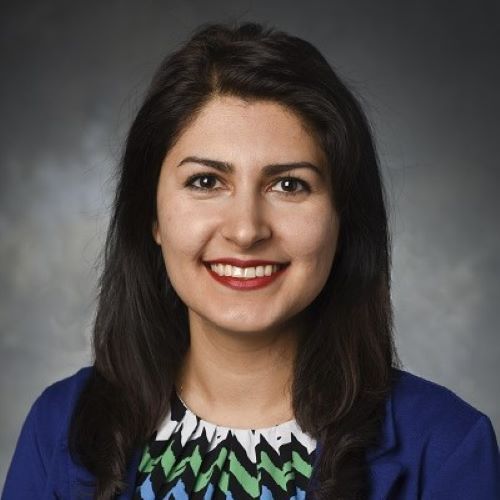
Farnaz Tehranchi
- Assistant Professor
- CSRAI Affiliate
Department/Unit: College of Engineering
Email: fjt5064@psu.edu
Research Interests: AI, Cognitive modeling, VR, HCI

Ted Toadvine
- Professor
- CSRAI Steering Committee
Department/Unit: College of the Liberal Arts
Email: tat30@psu.edu
Research Interests: Toadvine’s research over the last two decades has focused on the themes of aesthetics, animality, embodiment, environment, intersubjectivity, nature, ontology, philosophical method, and temporality. He draws inspiration from the phenomenological tradition (especially Husserl, Heidegger, Merleau-Ponty, and Levinas) as well as deconstruction and post-structuralism (especially Derrida, Nancy, and Deleuze). In 2003, he coined the term “ecophenomenology” to designate an approach to environmental theory that draws on the phenomenological tradition while critically reorienting its relationship with ecology and naturalism. Ecophenomenology is now a recognized field of study across the environmental humanities with proponents in ecocriticism, the arts, architecture, and animal studies, as well as philosophy.His research over the last decade develops a post-naturalistic approach to nature inspired by classic and contemporary sources in the continental tradition, including Bergson, Husserl, Heidegger, Scheler, Merleau-Ponty, Levinas, Derrida, Deleuze, Nancy, and Agamben. His first monograph, Merleau-Ponty’s Philosophy of Nature (Northwestern, 2009), contributes to the theoretical foundations of this new philosophy of nature by showing that Merleau-Ponty's conception of nature, as it develops across his major theoretical works, provides an alternative to naturalistic and constructivist accounts that dominate current environmental theory. Here Toadvine examines the contributions and limitations of Merleau-Ponty’s early Gestalt ontology, his account of radical reflection as a method for disclosing the anonymous level of sensibility and the immemorial past of nature, the radicalization of phenomenology’s investigations of non-human animals, and the significance of his later ontology for environmental concerns. This study lays the philosophical foundations for Toadvine’s original investigations in the philosophy of nature on topics that include nature’s resistance to reflection, the human-animal relation, the temporality of the elements, and biodiacritics.

Janet van Hell
- Co-Director of the Center for Language Science and Professor of Psychology and Linguistics
- CSRAI Affiliate
Department/Unit: College of the Liberal Arts
Email: jgv3@psu.edu
Research Interests: I study the neural and cognitive mechanisms of child and adult bilinguals' language processing, code-switching, accented-speech processing, and creative language use. I serve as PI on the NSF NRT program "Linguistic diversity across the lifespan: Transforming training to advance human-technology interaction", and as Director of the Center for Language Science.
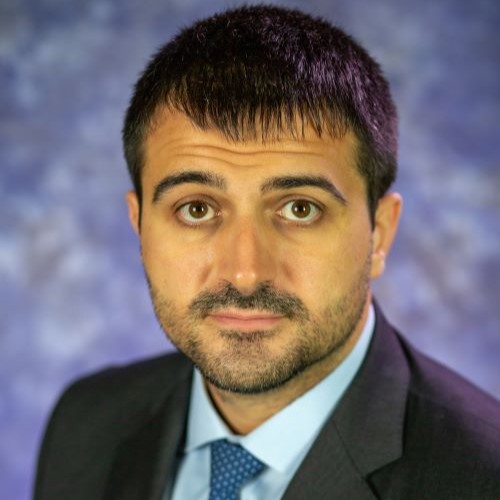
Mihail Velikov
- Assistant Professor of Finance
- CSRAI Affiliate
Department/Unit: Smeal College of Business
Email: velikov@psu.edu
Research Interests: I am interested in working on a paper that would use LLMs coupled with my own code base to automate the production of papers in academic finance.