
Directory

Sarah Rajtmajer
- Associate Professor
- CSRAI Affiliate
Department/Unit: College of Information Sciences and Technology
Email: smr48@psu.edu
Research Interests: Machine learning and AI, trust in information, privacy, metascience
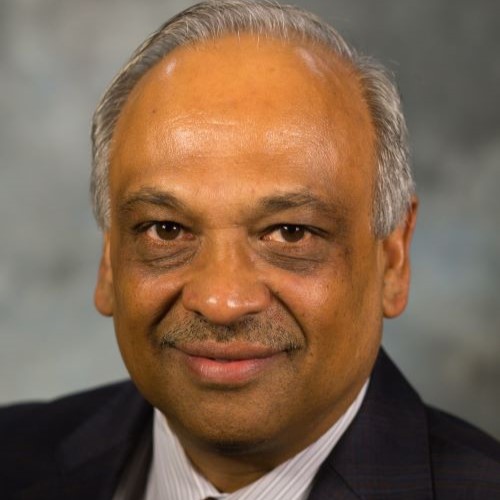
Arvind Rangaswamy
- University Distinguished Professor of Marketing
- CSRAI Affiliate
Department/Unit: Smeal College of Business
Email: axr15@psu.edu
Research Interests: Marketing Analytics and Digital Marketing, with a current focus on empirical analysis involving social networks, text and sentiment analysis, and influencer marketing.

Wesley Reinhart
- Assistant Professor
- CSRAI Steering Committee
Department/Unit: College of Earth and Mineral Sciences
Email: reinhart@psu.edu
Research Interests: Wesley Reinhart received his B.S. in Chemical Engineering from the University of Minnesota Twin Cities. He attended Princeton University on a National Defense Science and Engineering Graduate Fellowship, where he worked on strategies for predicting, understanding, and controlling colloidal crystallization using large-scale computer simulations and machine learning methods. After completing his Ph.D. in Chemical and Biological Engineering, he worked as a Research Scientist at Siemens Corporate Technology. His research initiatives there focused on computational geometry, knowledge representation, and exploiting the structure-function relationship in manufacturing contexts. He joined Penn State’s Department of Materials Science and Engineering in 2020 and holds an appointment as an Institute for Computational and Data Sciences Co-hire.

Jason Reuscher
- Associate Librarian, Research and Instruction Librarian
- CSRAI Affiliate
Department/Unit: University Libraries
Email: jar48@psu.edu
Research Interests: I am interested in how AI modelling can effectively transliterate culinary manuscripts written in Kurrentschrift to modern typeface and how AI can connect recipes and culinary techniques across anonymous and authored manuscripts in digitized collections.By using AI models to compare ingredients and cooking processes from German-language manuscripts in digitized holdings, my hope is to uncover clues to manuscript provenance and culinary novelty. On a broader level, I am also interested in how the introduction and spread of ingredients and culinary techniques as a result of the Colombian Exchange influenced European ingredient usage, culinary technique, and cuisine during the early modern period.

Steven Rice
- Assistant Professor of Music
- CSRAI Affiliate
Department/Unit: College of Arts and Architecture
Email: scr5385@psu.edu
Research Interests: Anti-racist artificial intelligence, anti-racist music information retrieval, computer-assisted composition, computer-assisted music theory, digital signal processing, unsupervised detection of racist musical topics, unsupervised identification of sound sources within signals

Donghyun Rim
- Associate Professor
- CSRAI Affiliate
Department/Unit: College of Engineering
Email: dxr51@psu.edu
Research Interests: My research focuses on integrating artificial intelligence with indoor air quality science to improve human health and well-being. I develop AI-driven digital twins, predictive models, and smart control strategies that optimize building ventilation and filtration, reducing pollutant exposure and infection risks. Ultimately, my work advances healthier, more resilient, and energy-efficient built environments, with particular attention to protecting vulnerable populations.

Stuart Selber
- Professor of English
- CSRAI Affiliate
Department/Unit: College of the Liberal Arts
Email: selber@psu.edu
Research Interests: Technical Communication, Computers and Composition, Human-Computer Interaction
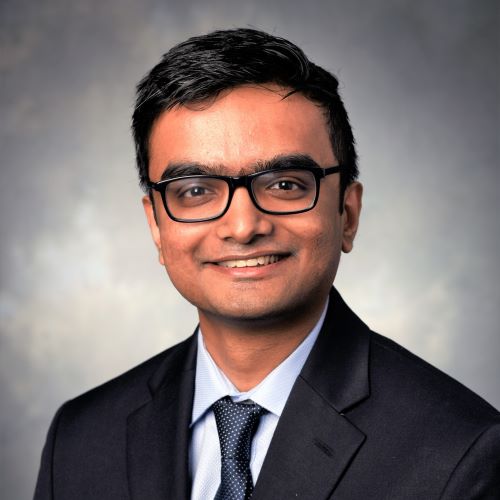
Abhronil Sengupta
- Associate Professor
- CSRAI Affiliate
Department/Unit: College of Engineering
Email: sengupta@psu.edu
Research Interests: Neuromorphic computing